
Training African tech talent: a collective challenge to transform demographic potential into an economic engine

Aurore Beuque
October 15, 2025


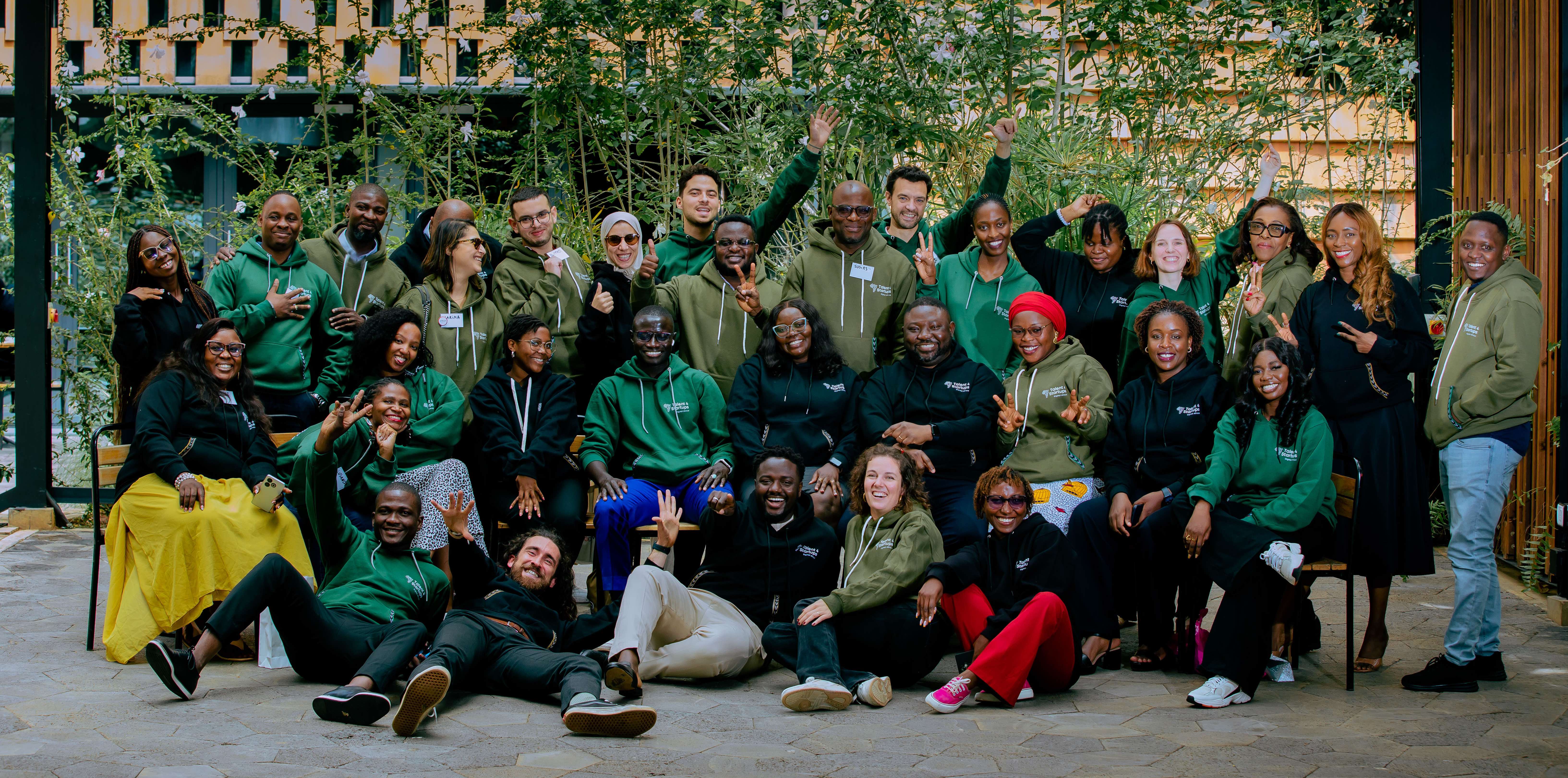
The resulting report is based on the participants' contributions and reflects a moment of collective intelligence, rich in observations, insights and avenues for action. This feedback enables us to share inspiration, open discussion and amplify the impact of initiatives aimed at training and integrating the continent's young talent.
Africa is young. Younger than any other continent! Over 60% of its population is under the age of 25 (UNDP, 2023). This human capital is an inestimable strength, but it also carries with it a paradox that can be cruel. While digital technology unfolds its many promises at high speed, millions of young people remain invisible, on the margins of employment and training.
Today, more than 20% of young Africans are unemployed, untrained and lacking specific skills (secondary education). In some countries, this rate climbs to 60% (World Bank, 2024). At the same time, almost two-thirds of job offers require a mastery of digital tools, while most education systems do not yet prepare students for this. The result: a persistent mismatch between available skills and market needs.
Faced with this situation, higher education is not enough to fill the gap: only 9% of young people have access to university, compared with 38% worldwide (UNESCO, 2024).
EdTech startups are emerging as decisive players, capable of bridging this gap. Although still fragile and concentrated in just a few countries, they represent one of the keys to transforming Africa's potential into collective success.
Necessary clarification - EdTech does not replace higher education, but fills its blind spots: flexibility, proximity to the market, inclusion of often forgotten audiences.
Although still fragile and concentrated in certain countries, they have already demonstrated their ability to reinvent learning paths. The Talent 4 Startups program is a case in point: over 3,400 young people trained in two years, in 20 countries, with a 65% placement rate in tech companies. Behind these figures lie individual trajectories, lives transformed, and companies finally finding the skills they were lacking.
The discussions in Kigali highlighted an often overlooked fact: Training is a continuous chain, sui generis in its operation; if one of the links breaks, the whole system irretrievably loses its effectiveness.
Howcan we identify the right profiles without excluding the most vulnerable? How can we ensure diversity and parity? How can we maintain motivation from the very start of training? The EdTechs present proposed creative approaches: symbolic contributions to reinforce commitment, programs "by and for women", mobilization of community networks, transparent communication on job opportunities...
Themajor risk remains losing students along the way, especially in e-learning. In response, a number of levers have emerged: gamification, collaborative projects, mentoring, hands-on experience. More than ever, training needs to be interactive, embodied and connected to professional and local realities.
Formersans insérer, c'est limiter les attentes des apprenants. Participants insisted on the need to build active networks of companies, organize meeting events, and multiply short but concrete experiences (micro-internships, practical projects) to facilitate entry into the world of work.
The Kigali workshop did not end the debate, but rather opened it up. By pooling their experiences, the African EdTechs confirmed an intuition: it is in the continuity between sourcing, training and integration that the real effectiveness of the systems lies.
Much remains to be invented: sustainable business models, cooperation mechanisms between countries, closer partnerships between startups, major companies and institutions. One thing is certain: the potential is immense, but it remains latent, and it's up to the African ecosystem to transform it into a tangible opportunity.
Training talent is not just about meeting a market need. It's about tracing trajectories, opening up futures, and giving a generation the means to write Africa's digital history.

.svg)
.svg)
.svg)
.svg)


.svg)

.svg)
.svg)